
For years, cottage cheese was the healthy snack sitting in the fridge that few people actually looked forward to eating. Now people blend it into pasta sauce, whip it into dips, bake it into flatbread and even freeze it into ice cream.
Protein explains most of that comeback. As more people look for simple ways to add protein to their day, cottage cheese has earned a second look. It’s affordable, ready to eat straight from the container and delivers a lot of protein for very few calories.
Where Cottage Cheese Gets Its Protein
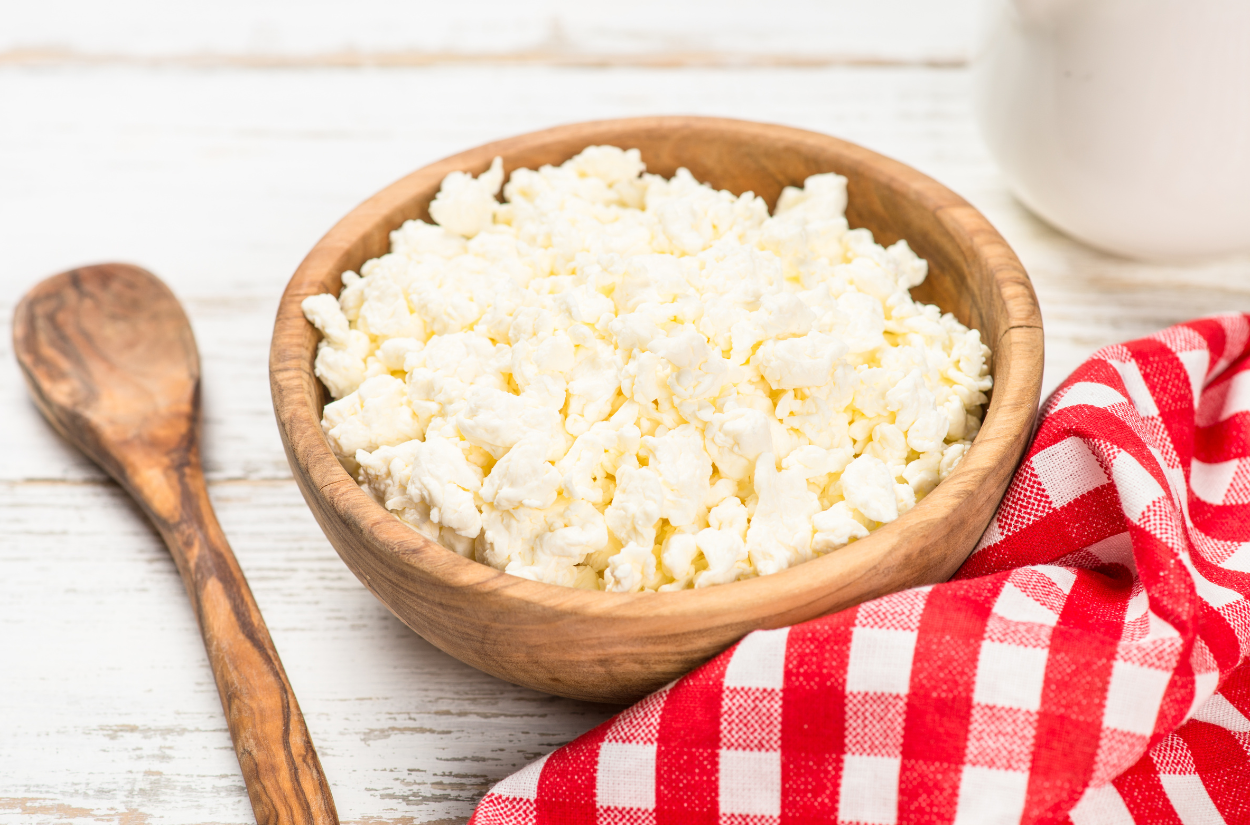
Milk contains two main proteins, casein and whey. When cottage cheese is made, milk separates into soft curds and a thin liquid called whey. Most of that liquid drains away, and the curds keep the casein. That’s why about 80 percent of the protein in cottage cheese is casein.
Because the curds are concentrated milk with much of the water removed, a half cup of cottage cheese has about 13 grams of protein. Casein also digests slowly. It helps you stay full longer and gives your muscles a steady supply of what they need to recover.
Protein is only part of what cottage cheese offers. It also has riboflavin and other B vitamins, which help your body turn food into energy, plus phosphorus, which supports strong bones. It has some calcium as well, though less than a glass of milk because part of it drains off with the whey. For most people, protein is the reason cottage cheese goes in the cart, and the rest of what dairy has to offer comes with it.
How Cottage Cheese Is Made
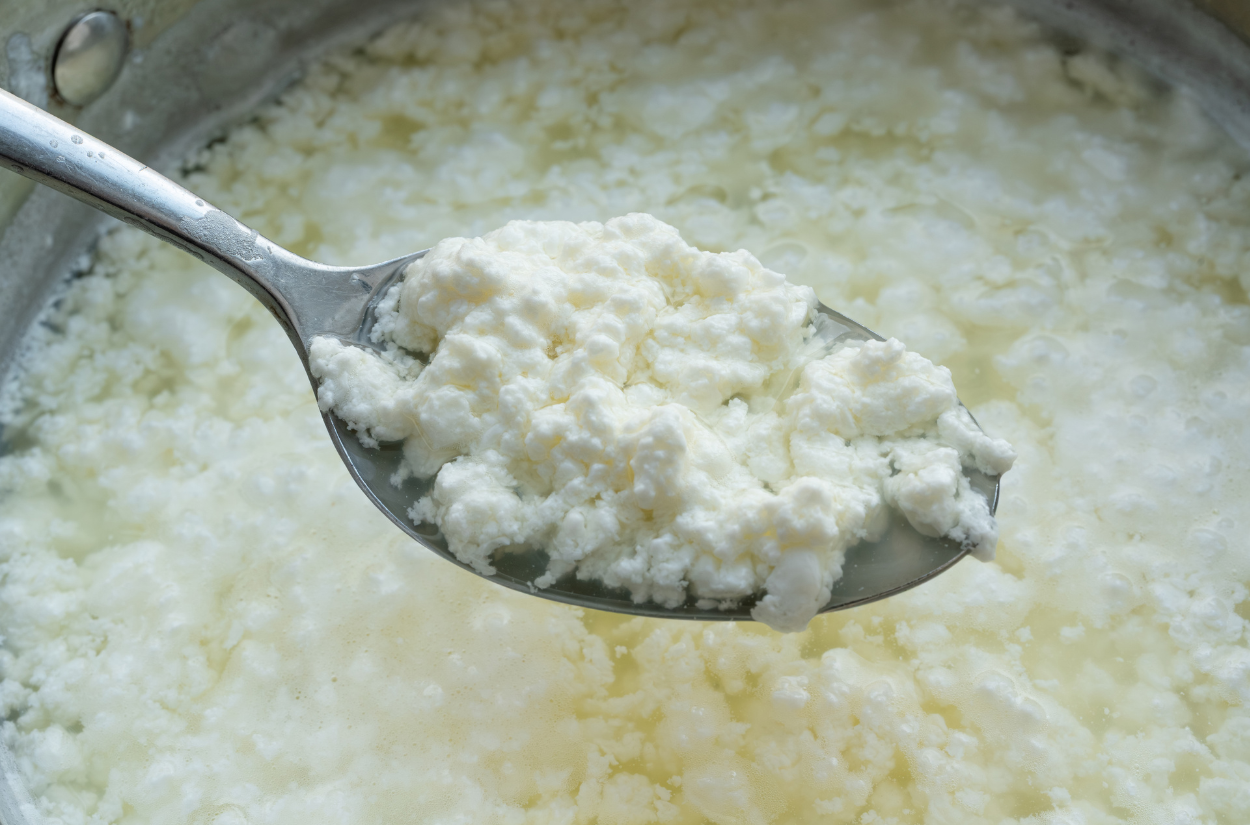
Cottage cheese is one of the simplest cheeses to make. It starts with pasteurized skim milk and a cheesemaking culture that gently sours the milk until it sets. Some makers also add rennet, an enzyme that helps milk firm up, which usually produces larger curds.
The set milk is cut into pieces and warmed, and then the whey is drained off. The curds are rinsed for a clean, mild flavor. Last, a light cream dressing is folded in. How much cream goes in decides whether the cottage cheese is sold as nonfat, low-fat or regular, which has at least 4 percent milkfat.
Cottage cheese is never aged. It moves from the vat to the container while it’s fresh, which keeps the curds tender and the taste mild.
Cottage Cheese vs. Other Dairy Foods
Every dairy food has protein, and the amount depends largely on how much of the milk’s water is removed. A cup of milk has 8 to 10 grams. A 1.5-ounce serving of cheddar has 9 to 11 grams. Cottage cheese has about 13 grams in a half cup.
Greek yogurt is the closest match, with 14 to 18 grams in a 6-ounce cup, because it also goes through a straining step. Traditional yogurt is not strained and has 5 to 7 grams. Each one fits into a balanced diet. Cottage cheese gives you a flexible choice that works in both sweet and savory dishes.
Easy Ways to Enjoy Cottage Cheese
Some experts suggest getting 20 to 30 grams of protein at each meal, and a scoop of cottage cheese gets you a good part of the way there. At breakfast, spread it on toast with sliced tomatoes or top it with fruit and a little honey. It also mixes well into pancake or waffle batter.
At lunch and dinner, stir it into pasta sauce for extra creaminess or use it in place of ricotta in lasagna. Blended until smooth, it makes a quick base for dips and spreads. For a snack, eat it with crackers, sliced cucumbers or a handful of berries.
The New York Dairy Behind the Protein
New York makes more cottage cheese than any other state, and more yogurt too. Many of the cultured dairy foods on shelves here start with milk from New York farms.
New York’s dairy community includes family farms of every size and processors that range from global companies to small artisan makers. Together they turn fresh milk into the foods that end up at breakfast tables, in lunchboxes and in late-night snacks across the state.
Cottage cheese gets its protein in a straightforward way. Milk is set, the whey drains off, and the curds that stay behind carry the protein. It’s a simple food with a lot of nourishment, made close to home by the farmers and cheesemakers who keep New York dairy going.
